Electronics Applied to Instrumentation
Enrolment is not open yet — next intake coming soon
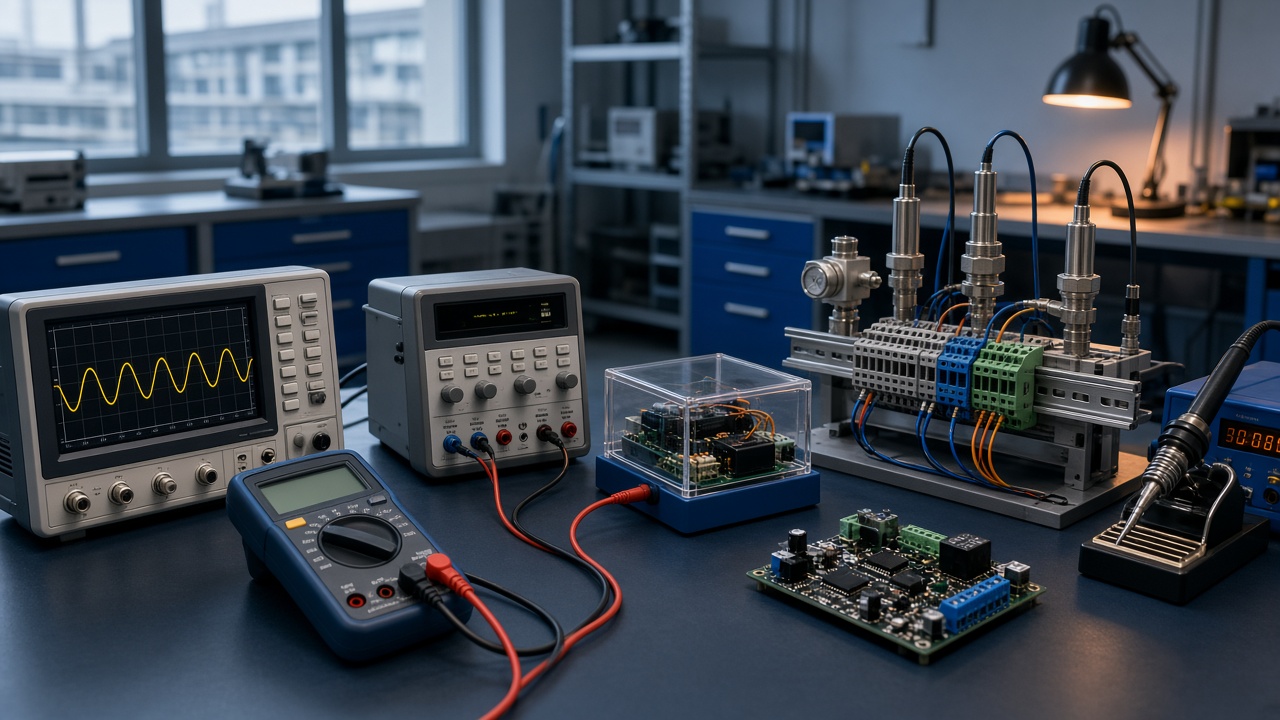
Build a solid electronics foundation and learn to measure, interpret and diagnose the signals that keep an industrial process running.
AUD 24
Expected results
- Read circuits and components used in instrumentation.
- Measure analogue and digital signals with a method.
- Connect sensors, transmitters and 4–20 mA / 0–10 V loops.
- Recognise noise, earthing and isolation in the field.
Course numbers
10 modules · 30 video lessons · four progressive projects and a final project · quizzes, practical exam and reference material
Modules
- Electricity and electronics fundamentals
- Components and circuit interpretation
- Multimeter and oscilloscope
- Power supplies and analogue/digital signals
- Industrial sensors and transmitters
- 4–20 mA and 0–10 V signals
- RTDs and thermocouples
- Filters and operational amplifiers
- ADC, DAC, isolation, earthing, noise and EMC
- Loop diagnostics, maintenance and final project
Who it is for
Technicians, instrument fitters, electricians and students who need to read field signals safely.
Prerequisites
Basic maths and an interest in circuits. Lab equipment helps but is not required to follow the lessons.
Industrial practice requires safety procedures, manufacturer documentation and authorised personnel.